
 Car shipping intelligence
Open car transport services
Compare open car transport costs, carrier options, timing, safety, and vehicle fit. Learn how open auto shipping works and request a route-specific estimate.
What to know about open car transport services
One real transport entity, supported by shipment decisions
This page owns Open car transport services. Manufacturer, industry, vehicle condition, trailer method, customer situation, origin, destination, and route remain supporting attributes or links to their own canonical entities-not duplicate keyword pages.
- Canonical owner
- Open car transport services remains the primary service entity; related attributes support it without creating duplicate canonical pages.
- Network evidence
- Vehicle-fit guidance before carrier matching · Route-specific pricing inputs instead of unsupported nationwide averages · Visible carrier-verification, coverage, inspection, and evidence boundaries
- Vehicle evidence
- Exact vehicle length, height, weight, ground clearance, and modifications · Tolerance for normal weather, dust, and road exposure · Running condition and whether the vehicle rolls, steers, and brakes
- Service evidence
- Confirm the year, make, model, trim, dimensions, operability, and modifications · Wash the vehicle and photograph every panel, wheel, glass surface, and existing mark in daylight · Remove personal property, toll transponders, loose accessories, and custom exterior items
- Local operating focus
- Compare open car transport costs, carrier options, timing, safety, and vehicle fit. Learn how open auto shipping works and request a route-specific estimate.
- methodEnclosed auto transportEvaluate covered equipment for sensitive, high-value, or low-clearance vehicles.
- conditionInoperable vehicle transportUse when rolling, steering, braking, tires, keys, or winch access need verification.
- vehiclePickup truck shippingConfirm cab, bed, lift, tire, rack, tool-box, and weight details.
- vehicleOversized vehicle shippingRoute measured dimensions and weight to specialty-equipment review.
- industryFleet vehicle transportPlan repeatable intake, condition reporting, access, and multi-unit handoffs.
- industryAuto dealership logisticsCoordinate inventory, release contacts, appointments, and vehicle handoffs.
- situationAuction vehicle transportVerify facility, buyer, release, keys, condition, deadline, and gate instructions.
- situationAuction-to-port shippingSeparate auction release and inland delivery from export and terminal acceptance.
Open car transport in practice
These realistic planning scenes show the equipment, handoffs, and condition checks customers can expect. Actual carriers, vehicles, locations, and loading arrangements vary by shipment.
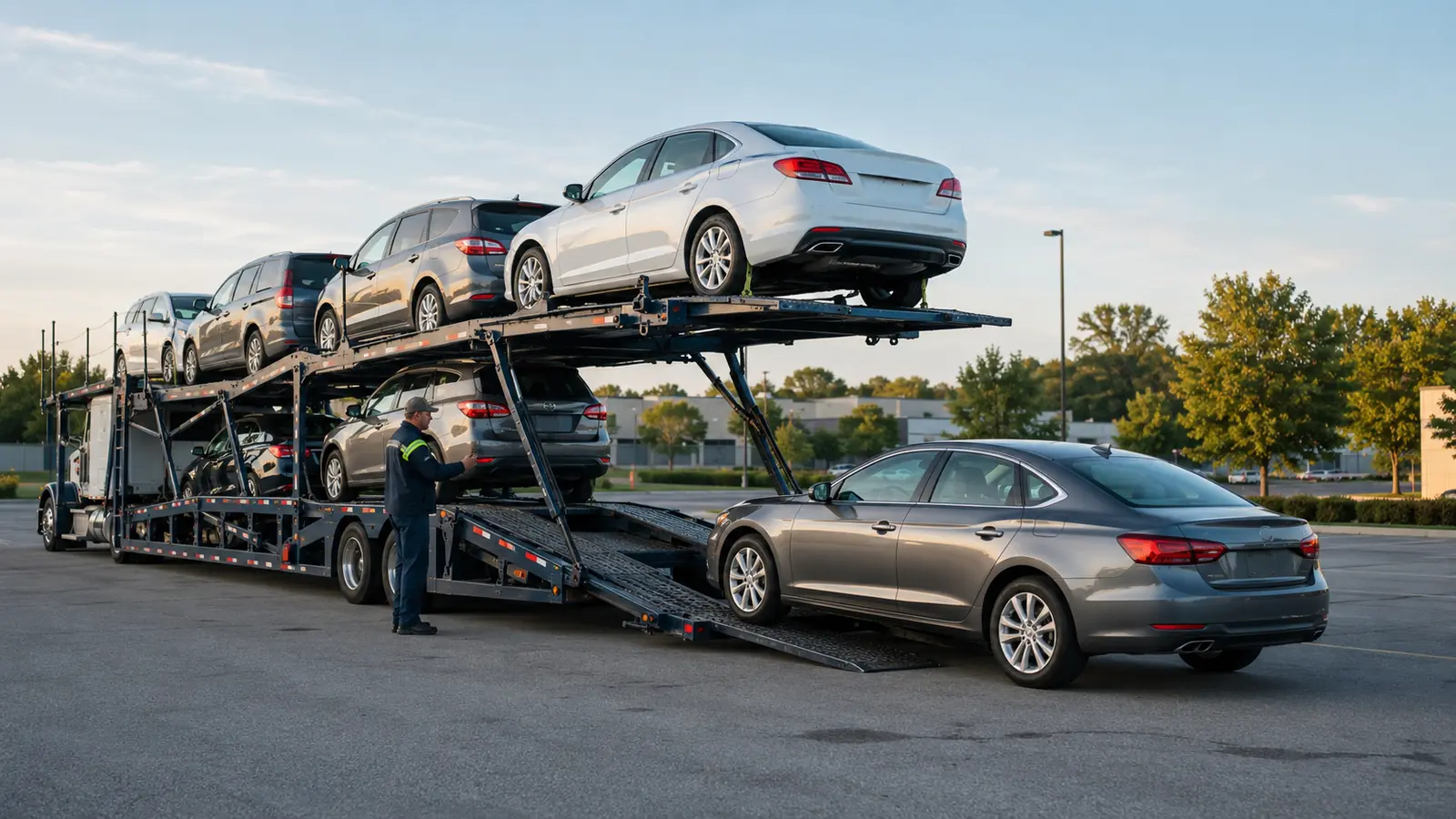
Open carrier loading and equipment check
A standard open multi-car carrier prepares to load an operable sedan at a truck-accessible meeting point.
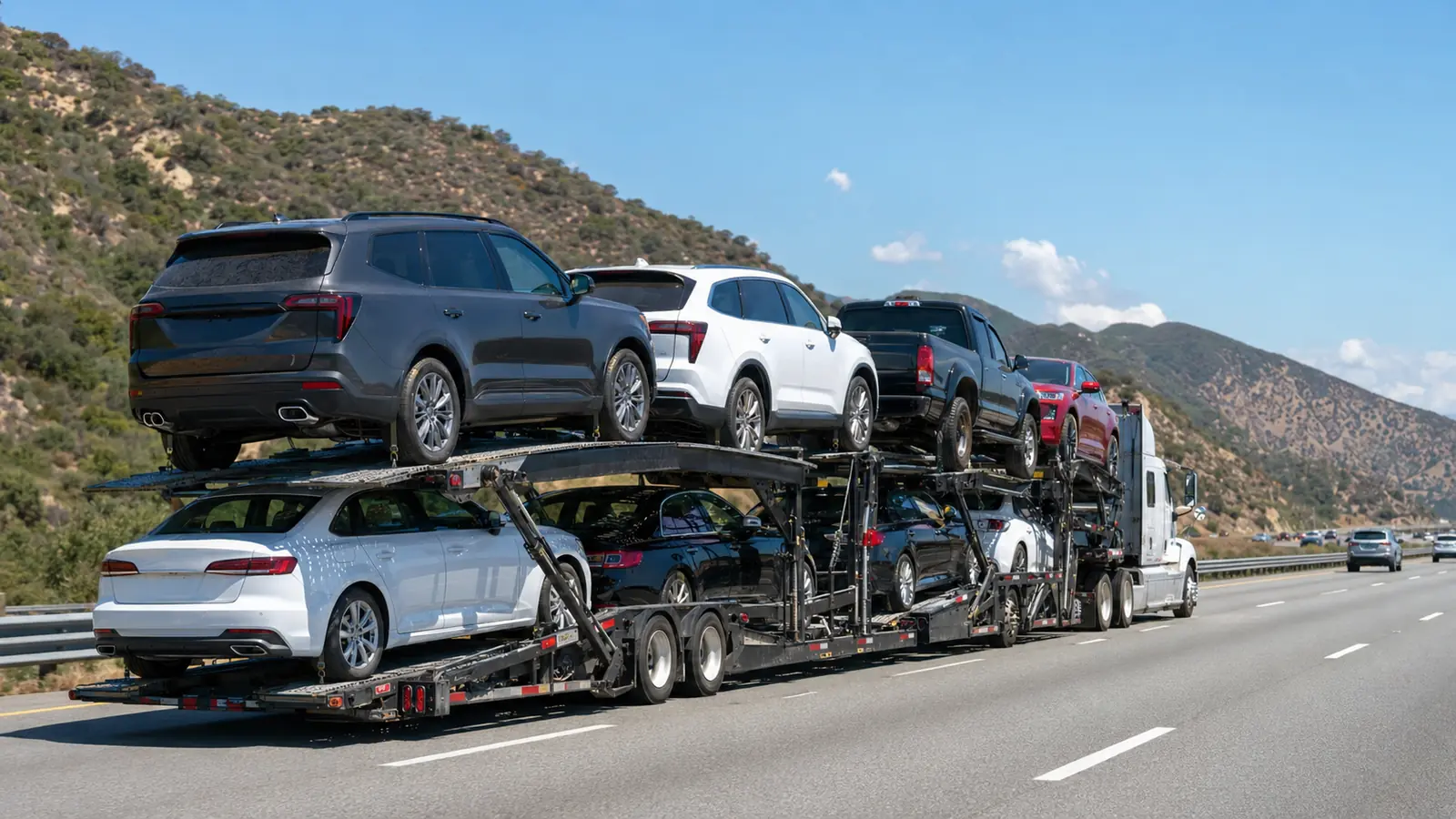
Open transport on an interstate lane
Multi-vehicle loading helps open carriers serve high-volume lanes, but availability still depends on the exact route and dates.
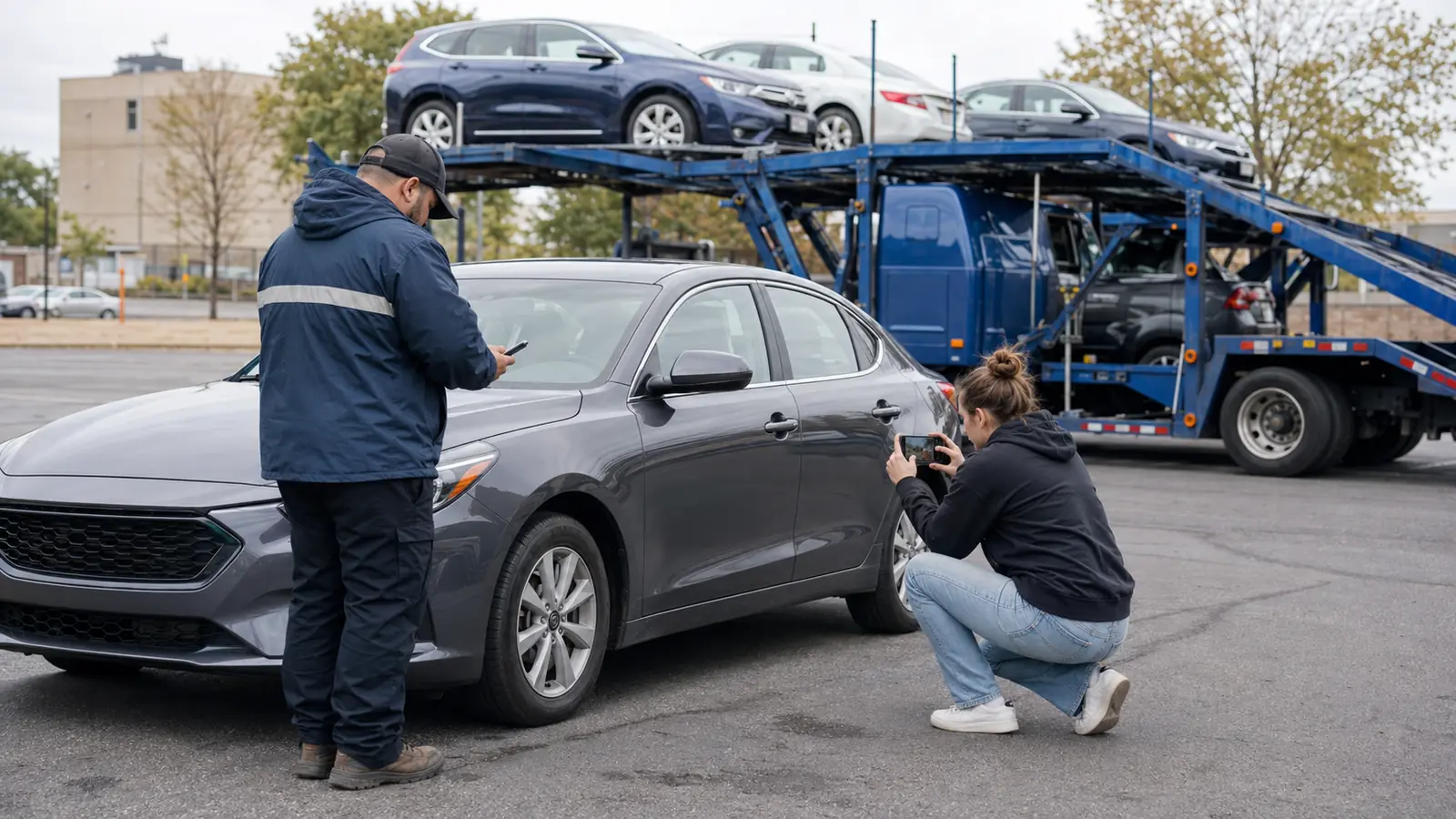
Pickup condition documentation
Customer and driver document visible condition before loading; photographs support but do not replace the signed inspection record.
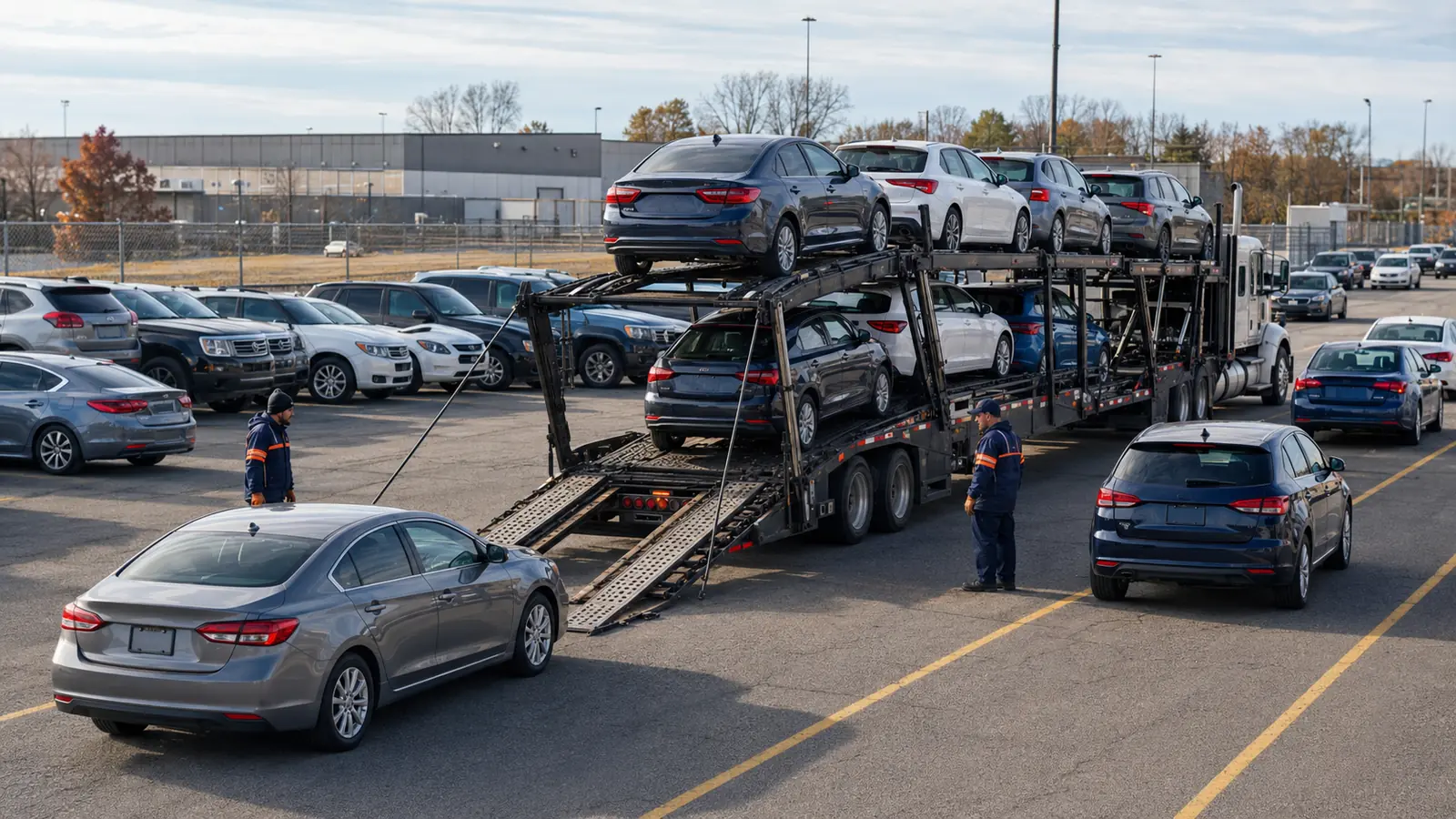
Dealer and auction vehicle staging
High-volume facilities require confirmed release documents, hours, vehicle condition, keys, and safe loading access.
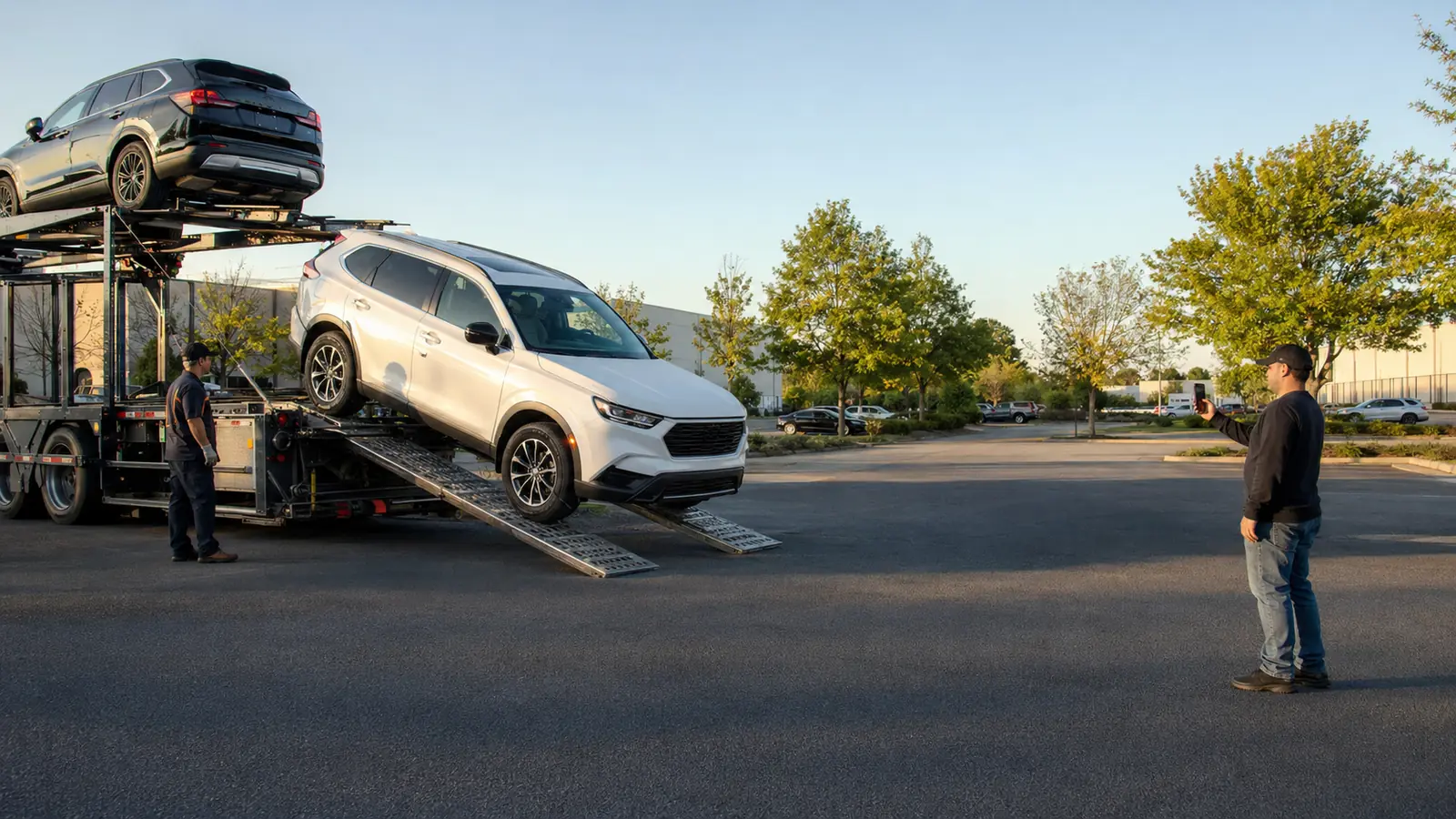
Safe unloading and delivery inspection
At delivery, inspect the vehicle against the pickup record and note material concerns before final signature.
Key facts
- Page type
- service decision guide
- Best for
- Owners shipping daily drivers, SUVs, pickups, electric vehicles, dealer or auction units, relocation vehicles, snowbird cars, and multi-vehicle household or fleet shipments.
- Indexing status
- Approved for index,follow
- Reviewed
Decision points to verify
| Planning factor | Why it matters | What to verify |
|---|---|---|
| Exact vehicle length, height, weight, ground clearance, and modifications | Vehicle-fit guidance before carrier matching | Confirm the year, make, model, trim, dimensions, operability, and modifications |
| Tolerance for normal weather, dust, and road exposure | Route-specific pricing inputs instead of unsupported nationwide averages | Wash the vehicle and photograph every panel, wheel, glass surface, and existing mark in daylight |
| Running condition and whether the vehicle rolls, steers, and brakes | Visible carrier-verification, coverage, inspection, and evidence boundaries | Remove personal property, toll transponders, loose accessories, and custom exterior items |
| Route, rural or metro access, first-available date, and pickup-window flexibility | A complete pickup-to-delivery decision path with five original operational images | Leave roughly a quarter tank of fuel and check for fluid leaks |
Prepare for dispatch
Preparation reduces failed pickups, pricing changes, and handoff confusion.
- Confirm the year, make, model, trim, dimensions, operability, and modifications
- Wash the vehicle and photograph every panel, wheel, glass surface, and existing mark in daylight
- Remove personal property, toll transponders, loose accessories, and custom exterior items
- Leave roughly a quarter tank of fuel and check for fluid leaks
- Disable alarms and provide working keys or access devices
- Record pickup condition on the Bill of Lading before the vehicle is loaded
- Keep pickup and delivery contacts reachable and identify a safe backup meeting point
- Inspect at delivery before signing and record material differences on the delivery paperwork
Is open transport right for your vehicle?
Open auto transport is the standard fit for most operable, normally sized passenger vehicles when the owner accepts ordinary weather and road exposure. The decision should be based on the actual vehicle profile, protection preference, loading angle, route, timing, and qualified equipment-not on price alone.
Choose a different method when the vehicle has very low clearance, unusual dimensions, fragile modifications, exceptional value, irreplaceable finishes, or an owner requirement for reduced visibility and exposure. Those factors may justify enclosed or specialty transport even when an open carrier is available.
| Vehicle or requirement | Likely starting option | Verify before booking |
|---|---|---|
| Standard sedan or crossover | Open carrier | Dimensions, operability, route, and access |
| Full-size SUV or pickup | Open carrier when capacity permits | Height, length, weight, racks, lifts, and tires |
| Electric or hybrid vehicle | Open or enclosed | Weight, clearance, charge level, keys, and transport mode |
| Non-running vehicle | Winch-capable open or enclosed carrier | Whether it rolls, steers, brakes, leaks, and has keys |
| Luxury, collector, exotic, or restored vehicle | Compare enclosed protection | Value, clearance, loading method, and coverage exclusions |
| Modified or oversized vehicle | Manual equipment review | Measured dimensions and photographs of modifications |
How open car shipping works
The process begins with exact addresses or practical meeting points, vehicle details, condition, and the first date the vehicle can be released. A quote request is not a carrier assignment: dispatch must still match the shipment with qualified equipment serving the lane.
- Enter the pickup, delivery, vehicle, operability, and timing information.
- Select open transport and review the route-specific estimate and assumptions.
- Confirm measured dimensions, modifications, condition, keys, and availability.
- Review the assigned carrier, equipment, pickup window, and contact plan.
- Prepare and photograph the vehicle before the driver arrives.
- Complete the origin inspection and retain the signed Bill of Lading.
- Stay reachable for timing updates and any safe meeting-point coordination.
- Inspect the vehicle before final signature and record material concerns immediately.
How much does open car transport cost?
There is no responsible nationwide flat rate for open car shipping. The estimate is calculated from the actual route and posted road mileage, vehicle footprint and weight, operability, access, season, pickup urgency, and current qualified-carrier supply. A displayed estimate is not a guaranteed final price until the shipment terms and carrier assignment are confirmed.
Longer trips usually raise the total while lowering the effective cost per mile because fixed pickup and delivery work is spread across more distance. Rural detours, oversized vehicles, inoperable loading, narrow time windows, seasonal lane imbalances, and expedited pickup can change that relationship.
| Shipment variable | Typical pricing direction | Operational reason |
|---|---|---|
| Longer route distance | Raises total cost | More driver time, fuel, toll exposure, and operating mileage |
| Larger or heavier vehicle | Usually raises cost | Consumes more trailer space or payload capacity |
| Inoperable condition | Usually raises cost | Requires compatible winch equipment and slower loading |
| Rural or restricted access | May raise cost | Adds mileage or requires coordinated staging away from active lanes |
| Flexible pickup dates | May improve matching | Gives dispatch more opportunities to use compatible capacity |
| Expedited or narrow pickup window | Usually raises cost | Requires priority outreach and tighter schedule alignment |
| Multiple compatible vehicles | May lower per-vehicle cost | Can use carrier capacity more efficiently on one lane |
| Modified, lifted, or low-clearance vehicle | Requires review | May change deck position, ramp angle, spacing, or equipment |
Open vs. enclosed car transport
Open and enclosed transport can both be appropriate when the carrier, equipment, securement, inspection, and coverage fit the shipment. Open transport prioritizes availability and multi-vehicle efficiency; enclosed transport prioritizes reduced exposure and specialty handling.
| Decision factor | Open transport | Enclosed transport |
|---|---|---|
| Best suited for | Most daily-use vehicles | High-value, rare, sensitive, or very low-clearance vehicles |
| Trailer environment | Open-air, usually multi-vehicle | Covered and lower-capacity |
| Carrier availability | Generally broader | Generally more limited |
| Relative price | Usually lower | Usually higher |
| Weather and road exposure | Vehicle remains exposed | Vehicle is shielded inside the trailer |
| Scheduling flexibility | Often greater on common lanes | May require additional lead time |
| Equipment questions | Deck position, ramps, securement, and clearance | Liftgate or ramps, interior clearance, and securement |
Open carrier safety, insurance, and vehicle inspections
Open carriers are widely used, but safe transport depends on active authority, suitable equipment, documented coverage, correct securement, and accurate condition records. Do not treat phrases such as “fully insured” as enough information: ask which carrier will transport the vehicle, request current documents, and review limits and exclusions that apply to that shipment.
Pickup photographs support the inspection record but do not replace it. Compare the delivery condition with the origin record before signing, note material differences on the Bill of Lading, preserve photographs and documents, and follow the responsible carrier's claim instructions without delay.
- Verify the transport provider and assigned carrier in FMCSA records.
- Confirm that the authority shown matches the role being performed.
- Request the carrier's current certificate or other applicable coverage documentation.
- Review limits, deductibles, exclusions, and treatment of personal property.
- Photograph the vehicle in daylight before loading and again at delivery.
- Keep the origin and delivery inspection records and signed Bill of Lading.
Open carrier types, loading, and securement
Open carriers vary in trailer length, deck arrangement, ramp angle, winch capability, available positions, and payload. The familiar two-level highway carrier serves many standard vehicles, while smaller open trailers can serve regional, urgent, or specialized assignments. Equipment fit must be confirmed for the exact vehicle.
| Equipment or position | Common use | Questions to confirm |
|---|---|---|
| Multi-level open carrier | Standard interstate and multi-vehicle shipments | Available position, height, length, weight, and route fit |
| Single-level or smaller open trailer | Regional, lower-capacity, or specialized moves | Trailer rating, ramps, securement, and availability |
| Winch-capable carrier | Vehicles that do not run but can be safely loaded | Roll, steer, brake, tires, leaks, keys, and access |
| Upper-deck position request | Owner preference for a particular deck area | Availability, vehicle dimensions, and whether a request can be honored |
| Low-clearance loading | Modified, performance, or low vehicles | Ramp angle, extensions, liftgate alternative, and measured clearance |
Pickup, transit, and delivery expectations
Door-to-door means service as close to each address as the carrier can safely and legally reach. Low branches, tight turns, weight restrictions, gated access, school zones, dense urban streets, and unsafe stopping areas can require a nearby commercial lot or other agreed meeting point.
Pickup windows and transit ranges remain estimates until the carrier confirms the assignment and progresses along the route. Weather, traffic, inspections, loading stops, driver-hours rules, customer availability, and access can change timing, so both contacts should remain reachable.
| Stage | Customer confirms | Carrier or dispatch confirms |
|---|---|---|
| Before assignment | Accurate vehicle, route, timing, and condition | Equipment fit and lane compatibility |
| Pickup planning | Release contact, access, keys, and backup meeting point | Pickup window and driver contact |
| Origin inspection | Visible condition and retained photographs | Inspection record and secure loading |
| In transit | Reachable pickup and delivery contacts | Material timing or access updates |
| Delivery | Daylight inspection when practical and documented concerns | Safe unloading and final paperwork |
Vehicles and customer situations served by open carriers
Open transport can serve household relocations, online purchases, dealer and auction releases, military moves, college transportation, snowbird travel, and fleet transfers. Each scenario has its own release, access, timing, and documentation requirements, which are addressed in the linked supporting guides.
- Sedans, hatchbacks, crossovers, minivans, and standard SUVs
- Pickup trucks and larger SUVs after dimension and weight review
- Electric and hybrid vehicles with correct transport-mode and access instructions
- Dealer inventory, online purchases, and released auction vehicles
- Non-running vehicles that match winch and loading requirements
- Household, military, student, snowbird, corporate, and fleet relocations
Nationwide open transport routes and geographic availability
Nationwide open car transport is not equally available on every lane at every moment. Major interstate corridors and metro-to-metro routes usually offer more frequent carrier movement, while rural origins, islands, mountain communities, border areas, and restricted urban addresses may require more lead time or a practical meeting point.
Route and location pages should own local details such as road mileage, major corridors, weather, ports, auctions, military bases, seasonal demand, truck access, and nearby staging options. This national page remains the canonical service owner and links users into those narrower geographic decisions.
- Cross-country and coast-to-coast open vehicle shipping
- State-to-state and regional carrier lanes
- Snowbird routes with directional seasonal demand
- Dealer, auction, port, and logistics-hub pickups
- Military and college relocation corridors
- Rural pickup planning and metro meeting-point alternatives
Open transport questions this hub answers
These concise decision paths help customers, search engines, and answer systems retrieve the correct supporting passage without forcing every narrower intent onto a separate competing page.
- What is open car transport and how does an open carrier work?
- Is open transport appropriate for a new, luxury, electric, or modified vehicle?
- How do route distance, vehicle size, timing, and carrier supply affect price?
- Is open transport safe and who provides the applicable coverage?
- How can I verify carrier authority and review insurance documents?
- What should be recorded during pickup and delivery inspections?
- Can a non-running vehicle use an open carrier with a winch?
- Can a large carrier reach my street or will we need a meeting point?
- How long do pickup and transit take, and what can change the estimate?
- What fuel level, keys, photographs, and preparation are required?
- When should I compare enclosed transport or specialty loading?
- Where can I find route, state, city, auction, dealer, and customer-specific guidance?
What makes this planning page distinct
- Vehicle-fit guidance before carrier matching
- Route-specific pricing inputs instead of unsupported nationwide averages
- Visible carrier-verification, coverage, inspection, and evidence boundaries
- A complete pickup-to-delivery decision path with five original operational images
Illustrative planning case studies
These are disclosed planning scenarios, not real customers, prices, savings, transit promises, or shipment outcomes.
Daily-driver relocation between major metro areas
- Situation
- An operable standard sedan is ready within a flexible multi-day window, and both addresses have practical commercial meeting points nearby.
- Decision
- Begin with open transport, confirm the live route and vehicle details, and preserve flexibility for carrier matching.
- Planning outcome
- The shipment is positioned for broad equipment compatibility without inventing a pickup promise or fixed price.
- Lesson
- Standard dimensions, operability, metro access, and flexible dates create the clearest open-carrier fit.
Lifted pickup requiring manual equipment review
- Situation
- A pickup has oversized tires, added height, and exterior accessories that were not reflected in the initial model-based profile.
- Decision
- Pause automatic assumptions, obtain measured dimensions and current photographs, and confirm trailer position and payload before assignment.
- Planning outcome
- The equipment decision is based on the modified vehicle rather than the stock trim.
- Lesson
- Measured height, width, length, weight, and modifications matter more than the badge or body style.
Non-running auction vehicle with a storage deadline
- Situation
- A released auction unit does not start but is reported to roll, steer, and brake; pickup hours and loading rules are limited.
- Decision
- Verify release status, keys, condition, facility access, and winch-compatible equipment before dispatch.
- Planning outcome
- The plan separates auction readiness from carrier availability and prevents an unsupported standard-load assumption.
- Lesson
- Release evidence, operability details, and facility rules must align before a truck is sent.
Frequently asked questions
What is open car transport?
Open car transport ships a vehicle on an uncovered carrier, usually with several other vehicles. It is the standard starting option for many cars, SUVs, and pickups because compatible equipment is widely used. The vehicle remains exposed to normal weather and road conditions throughout the trip.
How much does open car transport cost?
The price depends on the exact route and road mileage, vehicle size and weight, operability, access, first-available date, pickup urgency, season, and live carrier capacity. Use a route-specific estimate rather than a single nationwide average, and confirm the shipment assumptions before treating any amount as final.
Is open car transport safe?
Open carriers routinely transport standard vehicles, but safety depends on active authority, suitable equipment, correct securement, documented coverage, and accurate pickup and delivery inspections. The vehicle is exposed to ordinary weather and road conditions, so owners should compare enclosed transport when reduced exposure is important.
Is open transport always cheaper than enclosed shipping?
Open transport is usually less expensive because open carriers commonly move more vehicles and offer broader equipment availability. It is not automatically the lowest option on every lane or date. Vehicle size, route, urgency, season, and carrier position can change the actual difference.
Does insurance cover my vehicle on an open carrier?
The assigned motor carrier should provide the applicable cargo-coverage documentation, but limits, deductibles, exclusions, and claim procedures vary. Ask which carrier will physically transport the vehicle, review current documents, photograph the vehicle, and keep the signed inspection paperwork. Do not rely only on a generic “fully insured” statement.
How can I verify an open car carrier?
Use the carrier's legal name and USDOT or MC number to review FMCSA SAFER and licensing records. Confirm that the authority status and role match the service being performed, then review current coverage documentation and any exclusions before releasing the vehicle.
How long does open car shipping take?
Pickup and transit depend on the lane, distance, weather, traffic, driver-hours rules, loading stops, equipment availability, and customer access. Timing remains an estimate until a qualified carrier accepts the shipment, and in-transit conditions can still change the delivery range.
Is open car shipping door to door?
It is normally coordinated as close to each address as the carrier can safely and legally reach. Tight residential streets, low branches, weight restrictions, gates, school zones, or unsafe stopping areas may require a nearby commercial lot or another agreed meeting point.
Can a non-running vehicle use open transport?
Yes, when the condition and equipment are compatible. Disclose whether the vehicle rolls, steers, brakes, has inflated tires and keys, leaks fluids, or has collision damage. A winch-capable carrier or additional loading support may be required, which can affect availability and price.
Can I leave personal belongings in the vehicle?
Do not assume personal property is accepted or covered. Extra items can add weight, obstruct inspection, create loss or damage disputes, and conflict with carrier rules. Remove personal belongings unless the responsible provider gives written instructions permitting a limited amount and explains the applicable risk.
Should I request a top-load position?
A top-load request is a preference, not an automatic guarantee. Availability depends on the assigned trailer, vehicle dimensions, loading sequence, route, and other vehicles. Discuss the reason for the request and obtain written confirmation of any added terms before pickup.
When should I choose enclosed transport instead?
Compare enclosed transport for rare, exotic, collector, restored, exceptionally valuable, fragile, or very low-clearance vehicles, and whenever the owner prioritizes reduced weather, road-debris, or visibility exposure. Confirm loading equipment and coverage rather than choosing by vehicle value alone.
Sources and editorial review
Last substantive review: . Rules, terminal instructions, carrier acceptance, schedules, and equipment conditions can change. Confirm current shipment details with the responsible provider or agency before dispatch.
- Protect Your Move: vehicle transport consumer guidanceFederal Motor Carrier Safety Administration · checked
- SAFER Company Snapshot and authority recordsFederal Motor Carrier Safety Administration · checked
- Operating authority status definitionsFederal Motor Carrier Safety Administration · checked
- Insurance filing requirementsFederal Motor Carrier Safety Administration · checked
- 49 CFR 393.132: securement of automobiles, light trucks, and vansElectronic Code of Federal Regulations · checked